Help Nature Survive the Cold
As the temperature drops and snow covers the ground, local wildlife struggles to find food. Building a DIY winter bird feeder is not just a fun holiday craft for the family; it is a lifeline for your feathered neighbors.
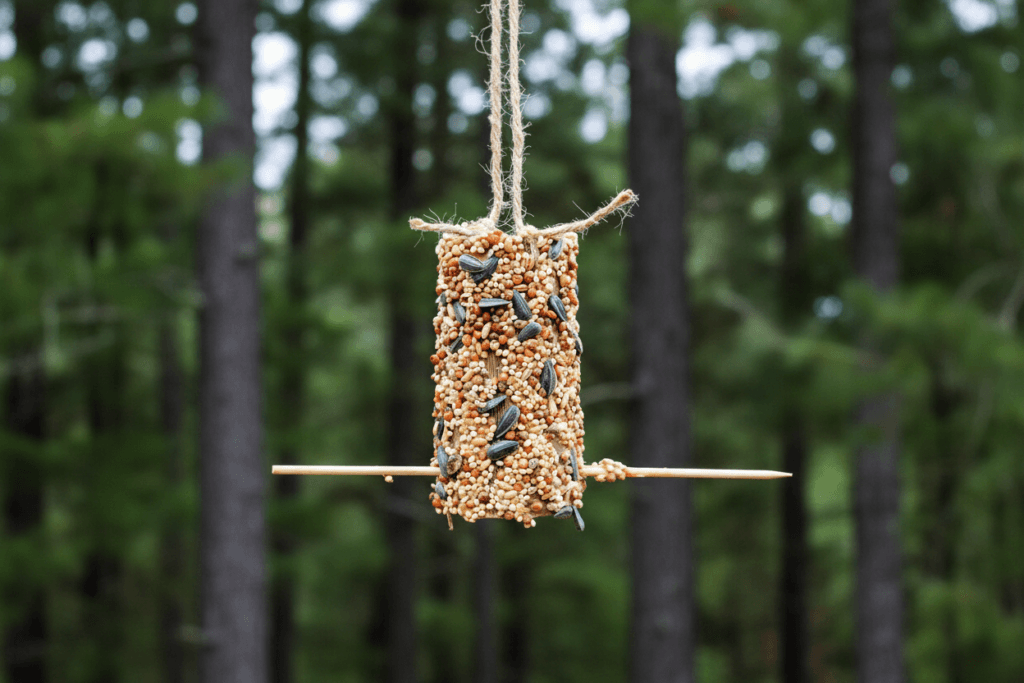
Whether you have a full woodshop or just a kitchen table, there is a DIY winter bird feeder project for you. In this guide, we share 5 simple plans ranging from “5-minute crafts” to sturdy wooden stations that will last for years.
1. The Classic Pinecone Feeder (Kid-Friendly)
Best for: Toddlers and quick afternoon fun.
This is the quintessential DIY winter bird feeder. It uses natural materials and is fully biodegradable.
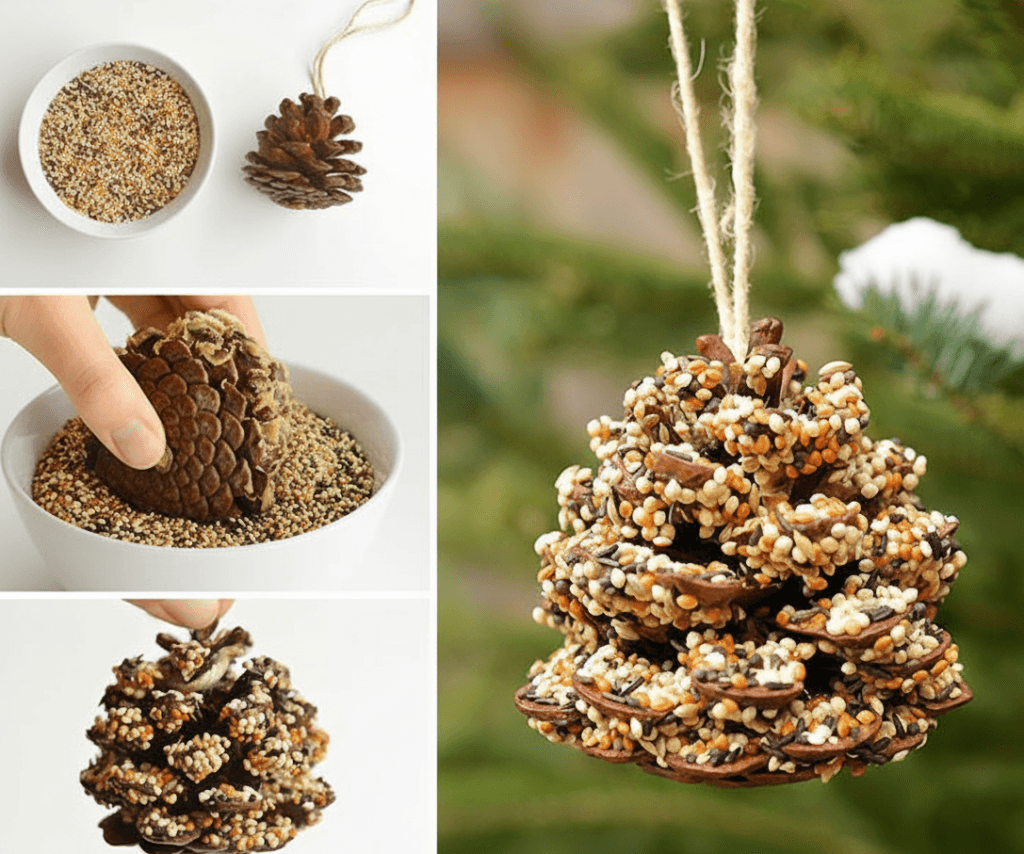
- The Base: Find a large, open pinecone.
- The Glue: Coat it heavily in peanut butter (or vegetable shortening if allergies are an issue).
- The Seed: Roll it in a bowl of Black Oil Sunflower Seeds. These seeds are high in fat, which birds desperately need in winter.
- Hang: Tie a piece of jute twine to the top and hang it on a sturdy branch.
2. The Upcycled Plastic Bottle Feeder
Best for: Recycling enthusiasts.
Don’t throw away that 2-liter soda bottle. Turn it into a functional silo feeder.
- The Holes: Cut two small holes opposite each other near the bottom.
- The Perch: Slide a wooden dowel or an old wooden spoon through the holes.
- Feeding Ports: Cut small holes above the perches for the birds to access the seeds.
- Fill: Use a funnel to fill it with mixed birdseed. The plastic protects the seed from snow and rain.
3. The Simple Wooden Tray Feeder
Best for: Beginner woodworkers.
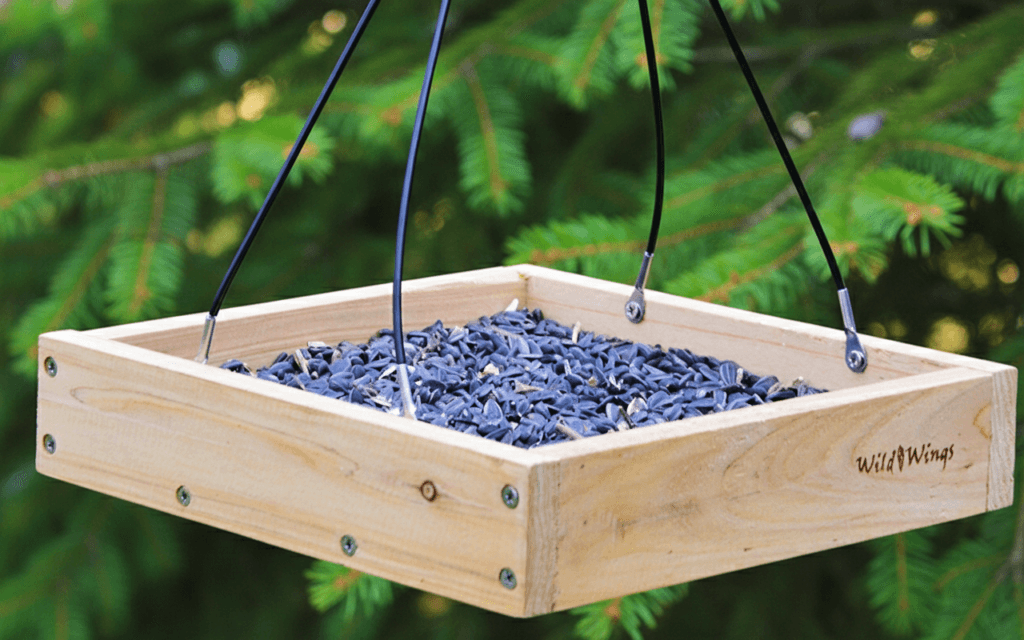
If you have some scrap wood, this platform feeder attracts the widest variety of birds (Cardinals, Jays, and Chickadees love open trays).
- The Build: You need a flat piece of plywood for the base (approx 12×12 inches) and four strips of 1×2 wood for the rim.
- Assembly: Nail or glue the rim around the edge of the base. This stops the wind from blowing the seeds away.
- Drainage: Crucial! Drill several small holes in the bottom to let melting snow or rain drain out so the seeds don’t rot.
- Mounting: Screw it to the top of a fence post or hang it with a sturdy chain.
4. The Suet Log Feeder
Best for: Woodpeckers and Nuthatches.
Suet (animal fat) is high-energy fuel for winter birds.

- The Log: Take a piece of natural firewood or a thick branch (about 3 inches diameter).
- The Drill: Drill several large 1-inch holes into the wood, but not all the way through.
- The Fill: Press store-bought High-Energy Suet Cakes or homemade fat mixture into the holes.
- Result: A natural-looking feeder that blends into the tree.
5. The Mesh Sock (Thistle Feeder)
Best for: Goldfinches.
Some birds have tiny beaks and can’t crack sunflower seeds. They need Thistle (Nyjer) seed.
- The DIY: You don’t need to buy a sock. Use an old mesh produce bag (like the ones onions come in) or buy a roll of Fine Wire Mesh.
- The Build: Fill it with thistle seed, tie a knot, and hang it up. The birds will cling to the mesh and pull the tiny seeds through.
🛠️ PRO TIP: Stopping the Squirrels
The biggest enemy of any DIY winter bird feeder is the squirrel. They will eat everything in an hour.
- The Fix: If mounting on a pole, install a “Baffle” (a cone shape) below the feeder.
- The Spice: Birds cannot taste heat, but squirrels hate it. Mix a little cayenne pepper powder into your birdseed. It acts as a natural, harmless deterrent.
For more information on safe bird feeding, check out this guide by the National Audubon Society.
FAQ: Winter Bird Feeding
Q: What is the best food for a DIY winter bird feeder?
A: Black Oil Sunflower Seeds are the #1 choice because they have thin shells and high fat content. Suet is also excellent for freezing temperatures. Avoid “filler” mixes with lots of red milo/sorghum, as most birds toss it on the ground.
Q: Where should I hang my feeder?
A: Place your DIY winter bird feeder close to a window (for viewing) but within 10-15 feet of cover (bushes or trees). This gives birds a quick place to hide if a hawk or cat appears.
Q: Do I need to clean the feeder in winter?
A: Yes. Wet seeds can grow mold, which is fatal to birds. Clean your feeder every two weeks with hot soapy water, especially after a thaw.